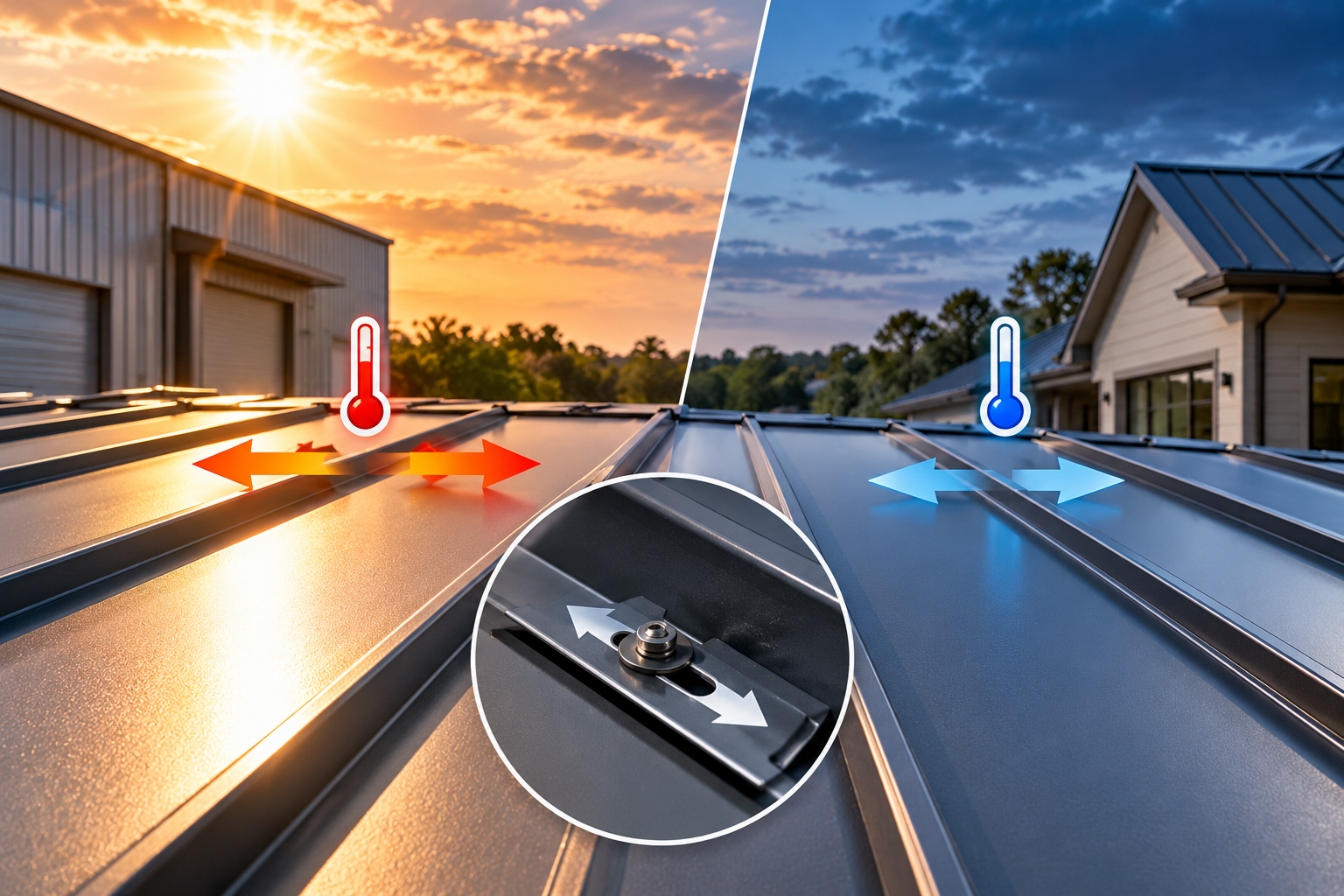
Anyone who paid attention in science class knows that certain materials contract and expand with temperature changes. Metal is a perfect example. With warm temperatures, metal roofing panels will expand. When it gets colder, even in Florida’s mild winters, metal can contract.
But what does this mean for metal roofs? What do contractors need to do to make sure this natural expansion and contraction doesn’t jeopardize a roof’s integrity? And what can happen when thermal movement, such as buckling, distorted panels, stressed fasteners, and potential leaks, is overlooked?
Our team at 1st Coast Metal Roofing Supply has some answers.
Why Does Metal Roofing Expand and Contract?
Let’s start by explaining what we mean by thermal movement and expansion. Simply defined and consistent with what we shared above, thermal expansion is a material’s response to a change in temperature. To explain further, when a material is heated, the increase in energy causes the atoms and molecules to move more and to take up more space; that is, to expand.
But it’s important to understand that not all materials expand the same way, not even metals. The amount of movement will depend on three factors:
- The panel’s length: The longer the panel, the more movement it will likely experience.
- The type of metal: Aluminum will expand more than steel under the same conditions because it has a higher rate of thermal expansion.
- Temperature change: The higher the temperature, the more expansion that you are likely to see.
It’s not just air temperatures that can cause expansion or contraction. Surface temperatures can also affect how much a material moves. And remember, this process happens repeatedly throughout the roof’s lifespan. As temperatures rise and fall from day to night and season to season, metal roofing panels will continue to expand and contract.
How Much Can Metal Roofing Panels Actually Move?
Now, let’s put this in the context of an actual roof. To do that, let’s consider a residential roof, with the understanding that the average residential roof size in the U.S. is between 1,500 and 3,000 square feet.
For example, a 40-foot steel roofing panel could expand by about half an inch if its temperature rises by 100°F. An aluminum panel of the same length could expand nearly twice as much with that same temperature increase.
Of course, these are just examples, not universal installation requirements. The actual amount of movement depends on the metal and temperature change. And we don’t normally experience a 100-degree temperature swing in one day.
So, why does this matter? Even small amounts of movement can put stress on a roof as temperatures rise and fall. This is especially important on larger commercial roofs with longer panels. Contractors need to plan for that movement when choosing materials and deciding how to install them.
What Happens When Thermal Movement Is Restricted?
At this point, we’ve established that expansion and contraction are normal. But what happens when metal panels can’t move as intended? It can put stress on the entire roofing system. And over time, it can lead to a host of problems, many of which might not be apparent for months or even years after the roof is installed.
Here are a few issues contractors should watch for:
- Restricted movement can cause panels to bend, warp, or become distorted.
- Repeated expansion and contraction can loosen fasteners or place pressure on attachment points.
- Movement can strain flashing around roof transitions, skylights, and penetrations.
- Repeated movement can weaken seals, creating opportunities for water intrusion.
While these problems won’t occur on every roof, they show why contractors need to account for thermal movement during planning and installation.
How Can Contractors Account for Thermal Movement During Installation?
This all begs a pretty big question. What do contractors need to know and do when installing a metal roof?
- Longer panels move more, so check manufacturer recommendations for panel lengths.
- Some standing seam roofs use sliding clips that allow panels to move. Exposed-fastener systems have different requirements.
- Pay attention to areas around skylights, pipe boots, and roof transitions where movement can cause stress.
- Follow manufacturer instructions for fastening patterns, clip placement, and other installation details.
Plan for Movement Before Installation Begins
The last thing any contractor wants is to finish an installation project, only to be called back weeks, months, or years down the road to find buckling, warping, or other issues that could have been avoided.
That’s why taking time to understand thermal movement and the necessary precautions is so important, long before that first panel gets installed. So, before you start your next roofing project in Florida, consider the material type, panel lengths, fastening requirements, and installation details. Doing your due diligence now will prevent some costly issues later. And when questions come up, address them before you place the order.
At 1st Coast Metal Roofing Supply, we’re here to help contractors get the materials they need for their next project. Contact our team to discuss available metal roofing panels, trim, and accessories.
